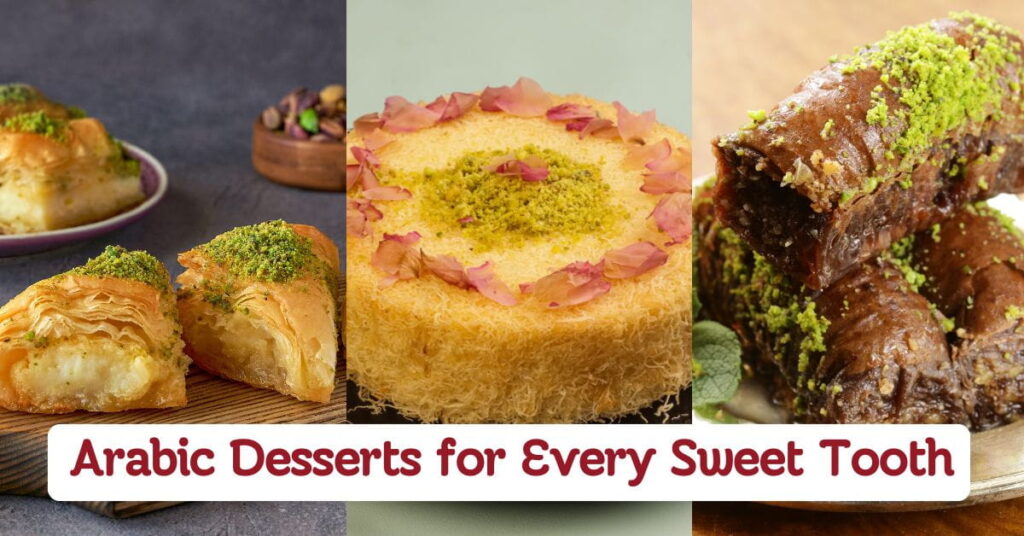
Have you ever wondered why Arabic desserts are loved across the world for their rich taste and unique textures? These sweets bring together simple ingredients like dates, nuts, semolina, and fragrant syrups to create unforgettable treats.
From crispy pastries soaked in syrup to creamy puddings infused with rose and orange blossom water, every dessert offers something special.
Many of these recipes have been passed down through generations, making them deeply connected to culture and celebrations. Whether served during festive occasions or enjoyed with a warm cup of tea, Arabic desserts provide comfort and joy in every bite.
This list features a delightful mix of classic favorites and lesser-known gems, perfect for anyone looking to explore new flavors. If you enjoy desserts with depth and character, these Arabic sweets are sure to satisfy your cravings.
Table of Contents
Toggle1. Baklava
Baklava is perhaps the most recognized Arabic dessert in the world, and for good reason.
Made from dozens of paper-thin phyllo pastry sheets layered with crushed pistachios, walnuts, or cashews, then soaked in a fragrant sugar syrup infused with rose water or orange blossom water, every bite delivers a perfect contrast of crispy and sticky.
It is cut into diamond or square shapes and served at celebrations, family gatherings, and everyday tea time alike.
2. Kunafa
Kunafa is a showstopper. This iconic dessert features a golden, slightly crispy shredded wheat or semolina base filled with stretchy white cheese or thick cream, then drenched in sugar syrup and topped with crushed pistachios.
It is best enjoyed hot, fresh off the pan, when the cheese is still pulling apart in long, satisfying strings. Originating from the Levant region, Kunafa has become a staple across the entire Arab world and beyond.
3. Maamoul
Maamoul are delicate, molded shortbread cookies filled with dates, walnuts, or pistachios. These little gems are dusted with powdered sugar and carry a buttery, crumbly texture that melts the moment they touch your tongue.
They hold a special place in Arab culture, particularly during religious celebrations like Eid and Easter, when families gather to make batches by hand using beautifully carved wooden molds passed down through generations.
4. Halva
Halva is a dense, crumbly confection made primarily from tahini (sesame paste) and sugar. Its texture sits somewhere between fudge and a dry cake. It breaks apart in flaky layers and has a rich, nutty depth that is hard to describe until you try it.
Often studded with pistachios, almonds, or chocolate swirls, Halva is sold in blocks at markets throughout the Arab world. It pairs exceptionally well with a strong cup of Arabic coffee or black tea.
5. Basbousa
Basbousa is a semolina cake soaked in sugar syrup, and it delivers big on flavor despite its simple ingredient list. Its golden surface has a slightly coarse texture that soaks up the sweet syrup beautifully, giving it a moist, dense crumb.
Traditionally topped with a single blanched almond or shredded coconut, Basbousa is made in large trays and cut into squares or diamonds. It is a no-fuss dessert that appears at nearly every Egyptian household’s table.
6. Umm Ali
Think of Umm Ali as the Middle Eastern answer to bread pudding, but better. This Egyptian dessert is made by layering torn flaky pastry or bread with nuts, raisins, and shredded coconut, then soaking it all in sweetened milk or cream and baking it until golden and bubbling.
The result is a warm, hearty, deeply comforting dessert that is impossible to eat just one bowl of. It is often served at family dinners and special occasions.
7. Barazek
Barazek are thin, crispy Syrian sesame and pistachio cookies that are addictive in the most wonderful way. One side is coated with toasted white sesame seeds, while the other is studded with crushed green pistachios, giving them a beautiful look and a satisfying crunch.
They are not overly sweet, which makes them incredibly easy to eat by the handful. These cookies are a famous specialty of Damascus and are widely gifted as a treat when visiting someone’s home.
8. Mahalabia
Mahalabia is a silky, milk-based pudding scented with rose water or orange blossom water. It has a smooth, delicate texture, lighter than panna cotta but more substantial than jelly, and it is typically poured into individual cups and chilled before serving.
Once set, it is garnished with crushed pistachios, a drizzle of rose water syrup, or dried rose petals. It is one of those desserts that looks deceptively simple but tastes incredibly refined and satisfying.
9. Rice Pudding (Roz Bel Laban)
Roz Bel Laban is the Arab world’s beloved version of rice pudding. Slow-cooked rice simmers in whole milk with sugar until thick and creamy, then it is delicately flavored with rose water or vanilla.
Served chilled in small bowls and topped with cinnamon, crushed nuts, or dried fruits, this dessert is pure comfort food. Every Arab family has its own version of Roz Bel Laban, and the debate over who makes it best is eternal and passionate.
10. Qatayef
Qatayef are small, thick pancakes that are folded and stuffed with sweet white cheese, clotted cream, or a nut-and-sugar filling, then either fried until golden or baked.
They are a staple of Ramadan nights, sold by street vendors under warm lights as families break their fasts and stroll through the evening.
Once fried, they are dipped into fragrant sugar syrup and served hot. Qatayef are best eaten fresh, when the crispy shell gives way to a warm, gooey center.
11. Warbat
Warbat is a Jordanian and Levantine pastry made from layers of phyllo or puff pastry filled with ashta (clotted cream) or cheese, then baked until golden and finished with a generous drizzle of sugar syrup and crushed pistachios.
The result is a flaky, creamy, syrup-soaked pastry that is light yet rich at the same time. Warbat is especially popular during Ramadan and is often purchased from specialty pastry shops known for making them fresh daily.
12. Ghraybeh
Ghraybeh are melt-in-your-mouth shortbread cookies that require very few ingredients but deliver an unforgettable texture.
Made with clarified butter, powdered sugar, and flour, they are baked low and slow until just barely golden, preserving their signature white, powdery appearance.
Each cookie is typically topped with a pistachio or almond. Ghraybeh are incredibly delicate; they shatter at the slightest bite, and their subtle sweetness makes them the perfect companion for a hot cup of tea or Arabic coffee.
13. Zalabia
Zalabia are deep-fried dough fritters that are crispy on the outside, soft and airy on the inside, and soaked in honey or sugar syrup. Depending on the region, they can be shaped into irregular blobs or round balls.
In North Africa, they are swirled into spiral shapes similar to funnel cake. However they are shaped, the result is the same: irresistibly golden, syrup-drenched bites that are best eaten hot. They are a popular Ramadan street food and a festive treat at celebrations.
14. Date Cake
Date Cake is a dense, moist cake built around the natural sweetness of Medjool dates, which are folded directly into the batter along with warm spices like cardamom and cinnamon.
The dates melt during baking, creating pockets of caramel-like richness throughout the cake.
Often finished with a drizzle of tahini glaze or a dusting of powdered sugar, Date Cake is a dessert that feels wholesome and deeply satisfying. It is popular across the Gulf states where dates are a staple ingredient.
15. Nabulsi (Nabulsi Cheese Sweet)
Nabulsi sweet, not to be confused with plain Nabulsi cheese, is a dessert preparation where the famous white brined cheese from Nablus, Palestine is desalted and used as a filling or topping in baked pastries.
When baked, it becomes soft and slightly stretchy. It is layered with semolina or pastry dough, bathed in sugar syrup, and sprinkled with pistachios.
The subtle saltiness of the cheese against the sweet syrup creates a contrast that is surprisingly and wonderfully addictive.
16. Tamriyeh
Tamriyeh is a lesser-known but deeply beloved Palestinian pastry made with layers of crispy dough filled with a date paste seasoned with cardamom, cinnamon, and sometimes anise.
The pastry is baked until golden, and the date filling caramelizes slightly inside, creating a warm, chewy center with beautifully spiced notes.
Tamriyeh is often enjoyed with tea and represents the kind of simple, wholesome sweetness that has been part of Palestinian food culture for generations.
17. Chocolate Covered Dates
Chocolate-covered dates take the already-perfect Medjool date and wrap it in a layer of dark, milk, or white chocolate for an effortlessly elegant treat.
The date’s natural caramel sweetness pairs beautifully with the slight bitterness of dark chocolate, and many versions include a hidden filling of almond butter, tahini, or crushed nuts inside the date itself.
These have become a hugely popular luxury sweet throughout the Gulf region and are often gifted in beautifully designed boxes during Eid, weddings, and holidays.
18. Semolina Cake with Cream
This version of semolina cake goes beyond the standard Basbousa. It is baked in thick layers with a generous filling of ashta (clotted cream) in the middle, giving each slice a creamy, luxurious center surrounded by the dense, syrup-soaked semolina on either side.
The top is typically decorated with crushed pistachios and a drizzle of rose water syrup. It is a richer, more indulgent take on a classic, and once you try the cream-filled version, the plain one simply will not do.
19. Kahk (Eid Cookies)
Kahk are the signature cookies of Eid Al-Fitr in Egypt, and no Eid celebration is complete without a tin of them on the table.
These round, buttery cookies are filled with dates, nuts, or a special sweet called agameya (a mixture of honey, nuts, and spices), then dusted generously with powdered sugar.
Their warm, spiced aroma fills Egyptian homes for days before the holiday as families bake them together. Kahk are gifted between neighbors, eaten with morning tea, and treasured as symbols of celebration.
20. Lebanese Booza Ice Cream
Lebanese Booza is unlike any ice cream you have ever had. Made with sahlab powder (derived from orchid tubers) and mastic resin, it has a uniquely stretchy, chewy, almost taffy-like texture that does not melt quickly.
It is traditionally made by stretching and pounding the mixture with large paddles in an open container of ice, and it is served on a cone with a sprinkle of crushed pistachios. The mastic gives it a subtle piney resin flavor that is one of a kind.
21. Apricot Pudding (Qamar Al-Din Pudding)
Made from dried apricot sheets (Qamar Al-Din) that are dissolved in water and sweetened, this pudding has a deep, tangy-sweet apricot flavor with a thick, jelly-like consistency.
It is poured into glasses or molds, chilled until set, and topped with crushed pistachios or a dollop of cream. It is one of the most iconic Ramadan desserts across the Levant and Egypt, beloved for both its refreshing taste and its beautiful amber color that glows like a sunset in a glass.
22. Maamounia
Maamounia is a warm Syrian semolina pudding that has been eaten for breakfast and dessert in Damascus for centuries. It is made by toasting semolina in butter, then slowly cooking it in sweetened water until it thickens into a smooth, porridge-like consistency.
Served warm in bowls with a generous pat of butter on top, a dusting of cinnamon, and sometimes a side of warm milk, Maamounia is humble comfort food at its finest. It is simple, filling, and deeply nostalgic for anyone who grew up eating it.
23. Znoud El Set
The name Znoud El Set translates to “lady’s upper arms,” a poetic nod to the dessert’s plump, cylindrical shape. These Lebanese pastries are made from thin phyllo dough rolled around a filling of thick ashta cream, then fried until crispy and golden, and immediately drenched in sugar syrup.
They are garnished with rose petals and crushed pistachios. The contrast between the shatteringly crispy pastry and the cool, floral cream inside makes Znoud El Set one of the most delightful textures in all of Arabic desserts.
24. Layali Lubnan
Layali Lubnan, which means “Lebanese Nights,” is a gorgeous layered dessert that starts with a base of semolina pudding flavored with orange blossom water, topped with a thick layer of ashta cream, and finished with crushed pistachios and a drizzle of rose water syrup.
It is served chilled and presented beautifully in a large tray or individual glasses. The combination of textures, creamy, soft, and slightly grainy from the semolina, along with the delicate floral notes, makes it feel utterly special.
25. Ashta Fingers
Ashta Fingers are delicate rolls of phyllo pastry stuffed with thick, lightly sweetened clotted cream (ashta), then baked or lightly fried and finished with a drizzle of honey or sugar syrup.
They are slender and elegant, making them a popular choice for dessert platters and celebrations. The pastry crackles when you bite through it, giving way to the soft, milky cream inside.
Topped with crushed pistachios and sometimes a few dried rose petals, Ashta Fingers are as beautiful to look at as they are to eat.
26. Aish El Saraya
Aish El Saraya, meaning “bread of the palace,” is a Lebanese dessert that lives up to its royal name. It is made by soaking thick slices of white bread in caramelized sugar syrup, then topping them generously with a thick layer of ashta cream.
The cream is often perfumed with rose water and orange blossom water, then garnished with pistachios. The bread base absorbs all the caramel sweetness and becomes wonderfully dense, while the cream on top keeps it light and cool. It is best served chilled.
27. Namoura
Namoura is a Syrian and Lebanese semolina cake that is similar to Basbousa but has its own distinct character. It is made with fine semolina and yogurt, which gives it a slightly tangy note, and it is soaked in plain sugar syrup rather than a flavored one.
Before baking, a whole almond is pressed into the center of each pre-cut square. The result is a firm yet moist cake with a golden top and a clean sweetness that is never overpowering. It is best paired with a cup of black tea.
28. Sfouf
Sfouf is a Lebanese turmeric cake with a vibrant golden-yellow color and a unique, lightly spiced flavor. Made with flour, semolina, sugar, and ground turmeric, it has a dense but tender crumb and a pleasantly earthy sweetness.
It is traditionally made without eggs, which makes it a common Lent-friendly treat in Lebanon. Decorated with pine nuts or sesame seeds pressed into the top before baking, Sfouf is cut into squares and served at room temperature. Its unusual color and flavor make it instantly memorable.
29. Meghli
Meghli is a spiced rice pudding made specifically to celebrate the birth of a new baby in Lebanese and Syrian families. Ground rice is simmered with sugar and a fragrant blend of caraway, cinnamon, anise, and cloves until it thickens into a dark, aromatic pudding.
It is poured into bowls and topped with soaked nuts, shredded coconut, walnuts, almonds, and pine nuts. Meghli is deeply spiced and warming, and eating a bowl of it feels like participating in a joyful, centuries-old tradition.
30. Sahlab
Sahlab is a warm, creamy winter drink turned dessert made from sahlab powder, which comes from the dried tubers of orchid plants. When dissolved in hot milk with sugar, it creates a thick, velvety drink with a mild, slightly floral flavor.
It is served in cups topped with cinnamon, shredded coconut, and crushed pistachios. On cold evenings in Cairo, Beirut, or Istanbul, street vendors serve steaming cups of Sahlab to passersby. It sits somewhere between a pudding and a hot drink, and it is wonderfully comforting.
31. Luqaimat
Luqaimat are bite-sized fried dough balls that are crispy outside, airy inside, and drizzled with date syrup and sesame seeds. They are one of the most popular Ramadan street foods across the Gulf, particularly in the UAE, Kuwait, and Saudi Arabia.
Eaten hot, fresh from the fryer, they pop in your mouth with a satisfying crunch before melting into soft, warm dough. The date syrup adds a deep, caramel-like sweetness that makes them completely irresistible. You will never stop at just one.
32. Balah El Sham
Balah El Sham are Egyptian churro-like fritters made from choux pastry piped through a star-tipped nozzle directly into hot oil, fried until deeply golden, and then soaked in sugar syrup.
They are crispy, ridged, and shaped like elongated fingers. The name means “Damascus dates,” as their shape resembles the long Sham variety of dates. Inside, the pastry is soft and slightly hollow, which allows the syrup to seep in beautifully.
They are best eaten warm, dusted with powdered sugar and a squeeze of lemon syrup.
33. Halawet El Jibn
Halawet El Jibn, meaning “sweetness of cheese,” is a stunning Lebanese dessert made by cooking melted Akkawi cheese with semolina and sugar until it forms a smooth, elastic dough.
This dough is rolled into thin sheets, filled with ashta cream and a drizzle of rose water syrup, then rolled into cylinders and sliced into rounds.
Topped with more ashta and crushed pistachios, each piece is floral, creamy, and just slightly savory from the cheese. It is one of the most uniquely textured and flavored desserts in the Arab world.
34. Mafrookeh
Mafrookeh is a decadent Gulf dessert made from semolina or crushed wheat that is toasted in clarified butter until golden and fragrant, then mixed with sugar and spices to create a dense, crumbly, and intensely buttery sweet.
It is often topped with a layer of thick cream and finished with crushed nuts or date syrup. Popular in Saudi Arabia and the Gulf states, Mafrookeh is a festive dessert served at weddings and Eid gatherings. Its richness means a small portion goes a long way, but you will always want more.
35. Rolled Date Cookies
Rolled Date Cookies are simple, elegant sweets made from a buttery dough that is spread with a smooth date paste seasoned with cardamom, then rolled tightly into a log and sliced into rounds before baking.
Once out of the oven, they are soft in the center with lightly crisped edges, and the date filling melts into a chewy, caramel-like center.
They are easy to make, deeply satisfying, and have the kind of homemade quality that feels personal and warm. A plate of these disappears faster than you expect.
Conclusion
Arabic desserts are more than just sweets; they are stories told in sugar, butter, and spice. Each recipe on this list carries a piece of history, culture, and family tradition. Whether you start with a simple Basbousa or go all in on Halawet El Jibn, you are in for something extraordinary. Happy tasting!